
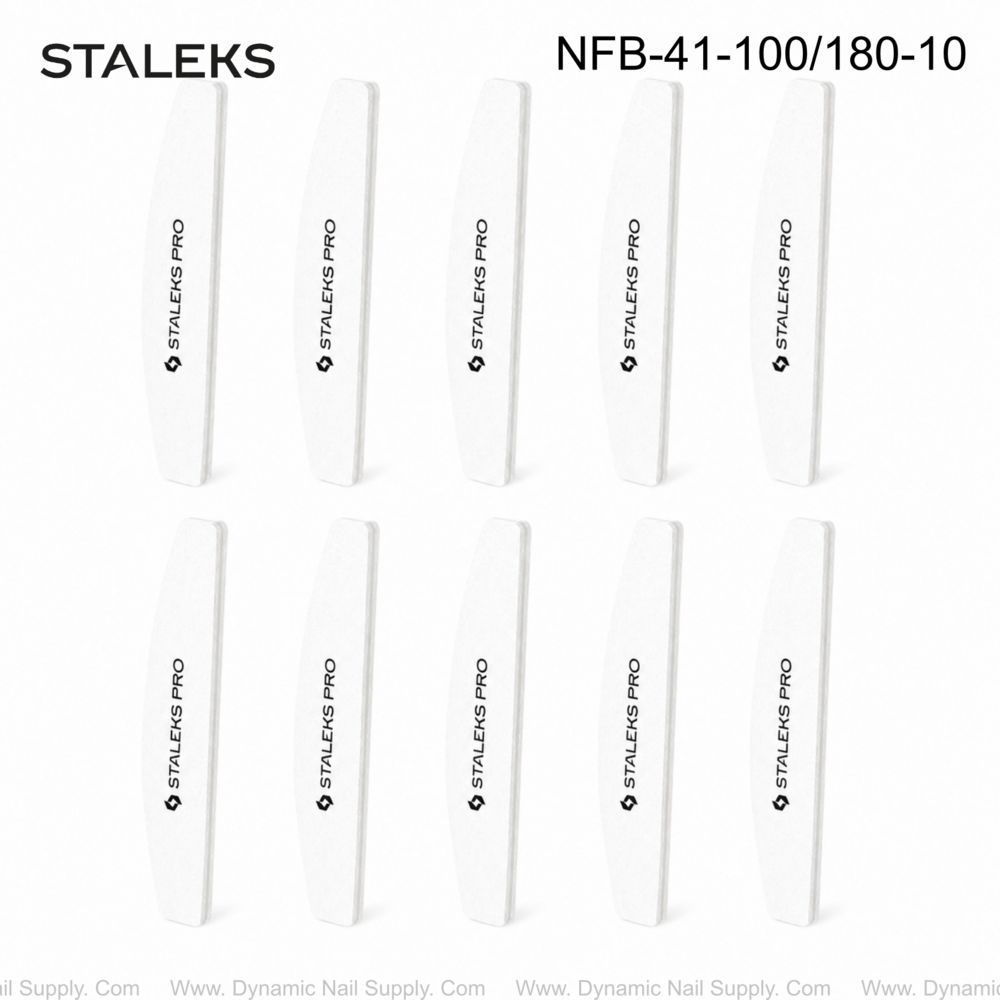
Dual-sided nail buffs can look simple, but using the right grit and shape makes a big difference in prep and finish. This guide explains what a 100/180 grit crescent nail buffer is, why the crescent profile matters, and how to use one safely whether you’re working on natural nails or enhancements.
What “100/180 grit” actually means
Grit numbers describe abrasive coarseness. The lower number (100) is coarser and removes material faster; the higher number (180) is finer and smooths the surface. A two-sided 100/180 buffer gives you both levels of abrasiveness in a single tool so you can correct heavy irregularities and then refine the surface before finishing.
Why the crescent shape helps beginners
The crescent profile combines a straight working area and a curved edge. The straight section covers broader surfaces efficiently, while the curved side lets you access cuticle-adjacent zones and sidewalls with more control. Rounded ends reduce the chance of accidentally scraping surrounding skin, which is a helpful safety feature for less confident users.
One quick note on sourcing
If you need to stock a salon or classroom, consider the 100/180 grit crescent nail buffer pack.
Step-by-step: beginner-friendly buffer routine
- Sanitize and set up. Work at a clean table, and have cotton, cleanser, and a trash container ready. The buffers in this pack are designed for single use—open a fresh piece when you’re ready.
- Initial shaping (if needed). If nails require reshaping, use a file first to establish the desired free-edge profile. The 100 side of the buffer is for more aggressive correction, like leveling ridges or refining enhancements.
- Surface correction with 100 grit. Hold the buffer flat and move gently across the nail to even out high spots. Use light pressure and short passes—100 grit removes material quickly, so less is more.
- Refinement with 180 grit. Flip to the 180 side and smooth the entire surface. This removes small scratches left by the coarser side and prepares the nail for polish, gel, or enhancements.
- Edge and sidewall attention. Use the curved profile to reach around cuticle folds and the sidewalls. The crescent shape gives better access than a straight block for these tight areas.
- Final check. Wipe the nail surface to remove dust. Look for even texture and gentle blending from cuticle to free edge before moving on to primer, base coat, or product application.
Key features explained
- Dual 100/180 grit faces — coarse for shaping and fine for smoothing in one tool.
- Crescent shape — straight working area plus a curved edge for access near cuticles and sidewalls.
- Rounded ends — designed to reduce accidental skin contact during professional use.
- Full-size working surface — comfortable to hold and maneuver across natural and artificial nails (product size: 180 × 30 × 12 mm).
- Consistent abrasive coating — formulated to give predictable grinding performance throughout use.
- 10 pieces per pack — suitable for practices that follow single-use hygiene protocols.
Practical tips for clean, professional-looking results
- Always start with the least aggressive action you think will work—you can always increase pressure or use more passes.
- Work in short strokes and check frequently; abrasive tools remove material quickly at 100 grit.
- Keep motions parallel to the nail surface rather than digging straight down to avoid over-thinning the plate.
- Use the curved edge to follow the natural nail contour—this reduces uneven spots near the cuticle and sidewall.
- Because these buffs are single-use, dispose of them after client service to maintain hygiene standards.
Who should use this buffer
This kit is aimed at professional nail technicians, salons, pedicurists, and training programs that need a reliable, disposable tool for preparing both natural and artificial nails. It’s also practical for newcomers who want a single, easy-to-handle tool that offers both shaping and finishing options.
Care, safety, and disposal
The rounded ends and controlled abrasive are designed to lower the chance of accidental contact with surrounding skin, but care is still required. Avoid over-buffing thin or damaged natural nails. Because the product is intended for single use, discard each piece after one client to prevent cross-contamination. If you run a salon or school, these single-use packs help you follow standard hygiene routines.
Available from Dynamic Nail Supply for $7.99, the 10-piece format is convenient for busy stations and training kits.
Conclusion
For beginners, a dual-sided 100/180 grit crescent buffer is a forgiving, versatile tool: use the coarse side to correct and the fine side to smooth, while the crescent profile improves access in tight areas. Follow the step-by-step routine above, respect single-use guidance, and you’ll get clean, consistent nail prep that sets the stage for professional finishes.